Behind The Allergy Adventures is a story shaped by real experiences and connection. In this blog, Jay shares how her journey led to building a supportive community. We caught up with her to hear more about her story firsthand
Hi Jay — let’s start at the beginning! Can you tell us a little about yourself, your work, and what a usual day in your life looks like?
Hi! I’m Jay, a mum, a marketer, and the creator behind The Allergy Adventures. I juggle life between working for a digital marketing agency, raising my kids, and building a social media page that supports allergy families like ours.
How did you first discover your son’s peanut allergy, and what was that experience like for you as a parent?
Nut allergies were always on my radar, which is why I followed the guidelines and waited until after 12 months to introduce peanuts. I actually waited until he was 14 months old. The first time I gave him a popular apple and peanut butter snack, he reacted almost immediately. He went red and became drowsy, although there were no breathing issues.
I contacted the doctor straight away, but the first GP I spoke to told me it was probably just a sensitivity because I had used organic peanut butter and that I should not worry. A few weeks later I tried again and the same thing happened. This time I saw a different doctor who took it seriously. He immediately ordered blood tests and the results came back positive for a peanut allergy. Even then, the only advice I was given was to avoid peanuts. I was not told what to look out for or how serious the allergy could be. I had no medication and no information.
A year later he had his first skin prick test. We were told to wait in the waiting room, but within seconds a nurse came out and explained that the reaction had been instant and severe. They did not continue the test. More blood tests were taken and his levels had doubled in just 12 months.
Each year after that we went back hoping his allergy had decreased. Two years later another blood test showed that his levels were now as high as an adult’s, and he was only four. That was the first time a doctor showed any concern and mentioned that maybe in five years a vaccine might exist. No other treatment options were offered.
Up until then I still had not been told anything about anaphylaxis, cross contamination, or emergency medication. I was given no EpiPen and no action plan. I was naïve because I did not know what I did not know. I simply avoided obvious peanut products without realising the real risks. I was not even checking “may contains.”
That was the moment I started doing my own research. I reached out to clinics in California about OIT and we were accepted, but the logistics were not possible. Then in February 2022, when my son was seven, I connected with a mum on Instagram in northern Spain who recommended Dr Isabella Fernández. We had a Zoom call and for the first time I felt that someone genuinely wanted to help. That appointment became the real turning point.
So, what was it like? The truth is that in the beginning it felt fine. I did not feel afraid because I did not have the information. I was unaware of the real risks, and looking back that lack of awareness is actually what scares me the most.
You’ve built such a great following over the years — what first inspired you to create Allergy Adventures?
Honestly, the reason I started the page was because I wanted to create a peanut allergy storybook for my son. I had been ordering allergy books from Amazon, but most of them were aimed at girls, so I decided to make my own. I had no funding and my mother-in-law kindly did the amazing illustrations. The story was based on real events because my son was moving to a new school and I wanted him to feel involved and included in the process.
At that time I did not follow anyone in the allergy community on Instagram. As soon as I created the page, I connected with Natasha’s Allergy Foundation and an incredible charity called Red Sneakers for Oakley. That is when everything changed for me. The foundation was created by the parents of Oakley, who sadly passed away from a nut allergy. Their story began in almost the exact same way ours did, but they lost Oakley on Thanksgiving after a single bite of cake. They had also received very little advice about how serious his allergy was or what to do in an emergency.
Reading their story was a turning point. It made me realise how dangerous it is when parents are not given proper information. If you do not know, you do not know, especially when doctors are not explaining the risks. From that moment I made it my mission to ensure other families would never be left in the same uneducated position that we were in.
How long have you been living in Málaga, and what has been your biggest challenge raising a child with a severe allergy abroad?
I have lived in Málaga since I was 17, so my son was born here. The biggest challenge has not been the lifestyle or the culture, but the fact that his allergy is considered rare in Spain. Most Spanish peanut allergies are linked to a specific protein that is also found in peach skin, so the standard treatment here is SLIT, which is designed for people who are allergic to both peanuts and peaches.
Because my son is British his genetics are different, and he has the type of peanut allergy that is common in the UK but much less common in Spain. It does not include the peach skin allergy, which means he falls into a very small minority. As a result, there is less urgency for treatments aimed at his type of allergy. We have to watch the UK, the USA and other European countries move forward with new allergy treatments while they are not yet available here.
The positive part is that our allergist is incredible. She understands the challenges and has placed us on an organic peanut trial, which is the closest option to active treatment that exists for him right now.
Another challenge is access to allergy friendly foods. Spain simply does not have the same range of safe brands and products that the UK has, and Brexit has made it even harder for companies to import those foods. It means a lot more planning and a lot fewer convenient options.
Have you noticed differences in allergy awareness or accessibility in Spain compared to the UK?
Definitely. The UK is miles ahead in terms of awareness, legislation, and expectation. Clear labelling, trained staff, and nut-free policies are more common there. Spain is improving, but it’s still inconsistent.
Most UK schools are now either nut free or have strict nut policies, while many schools in Spain are still behind on this. Some are great, but others have not yet adapted to the level of safety that allergy families need.
Restaurants can also be inconsistent. Some take allergies very seriously, but many will simply offer plain food rather than taking the time to check ingredients properly. Because of this I always carry an Equal Eats card to remove any confusion when eating out.
Do you have any tips for traveling safely with a child who has a peanut allergy?
Absolutely. These are the tips that help us travel with confidence:
- Pack double of everything.
EpiPens / JEXT, antihistamines and safe snacks. Always bring more than you think you will need. - Use allergy translation cards or app
They remove confusion and make communication clearer in countries where you do not speak the language well. - Tell hotels in advance.
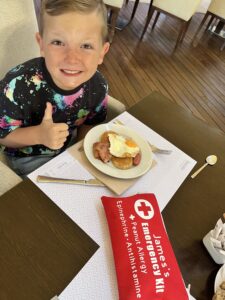
Let them know about the allergy before you arrive. This helps with breakfast options and reduces the risk of cross contamination. - Notify the airline early.
Inform them when you book and again at check in. Ask for an announcement on the plane and board early so you can wipe down your seats and tray tables. - Clean surfaces everywhere.
Planes, trains, rental cars and even taxis. You never know where traces might be. - Research before you go.
Look up supermarkets, allergy friendly restaurants, local emergency numbers and the nearest hospitals in the area. - Trust your instincts.
If a restaurant does not seem allergy aware, or the staff are unsure, leave. Safety always comes first.
Could you share a particularly memorable travel experience whether good or challenging – related to managing allergies?
One recent experience that really stood out happened at Costa in Málaga Airport. My son is at an age where he wants to do things independently, so he went to order a hot chocolate by himself. The lady serving him was incredibly kind. She did not dismiss his questions, she did not look around for a parent and she did not rush him. Instead, she spoke directly to him, showed him the allergy charts and even double checked everything for him.
Afterwards I went to thank her and she told me that Costa had recently improved their allergy training. She was grateful for the feedback. I shared the experience online and Costa actually visited her and gave her a customer service award. It was such a positive moment and a reminder that there are still people who genuinely care and take allergies seriously.
Your book ‘The Peanut Pirate’ balances fun storytelling with important allergy education. What inspired you to combine the two?
It actually happened by accident. The story was originally meant to focus on peanut allergies at school, but as I worked through it, it began to evolve naturally. Because it was based on a true experience, it shifted into something more relatable and more fun. I wanted it to feel real for my son and for other children, but also enjoyable to read. The adventure element was never planned, it just developed as the story took shape.
What’s one piece of advice you’d give to allergy parents who feel overwhelmed?
You do not have to get everything perfect.
It is a huge mental load, and it is normal to feel scared or exhausted. Over time, you will find your rhythm and become the expert your child needs.
It is not a race. Do what works for you and your family. If a party, playdate or event feels like too much, it is okay to say no. Remember, you are not alone. There are thousands of parents walking the same path, and reaching out for support is always ok.
Are there any brands, products, or tools that have been especially helpful in your allergy journey?
Yes, there are quite a few that have been helpful for us:
- Equal Eats allergy cards – incredibly useful when eating out, especially abroad.
- Vitalite – one of our household favourites, top 14 allergen free.
- Creative Nature – great for cake mixes, top 14 allergen free.
- Nomo – we honestly haven’t found a product from them we don’t like.
- Angelic Free From – the best oat bars for on-the-go. Top 14 allergen free.
- Wubag – a practical allergy bag.
- Allergy Apparel – for EpiPen and Jext care bags.
- Allergy Penpals – allergy labels and tags.
- The Allergy Badge – fantastic allergy training resource.
- AllergyAid – an app that has been a complete game-changer for both parents and kids.
These tools make managing allergies easier, safer, and a lot less stressful.
To finish up are there any new projects, books, or ideas you’re excited to explore next
Yes I am currently looking at a new allergy book, hopefully coming soon in 2026
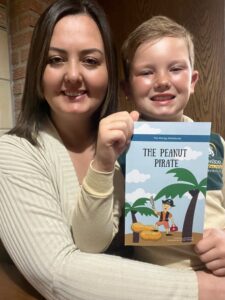
Jay has built a powerful and growing community through The Allergy Adventures, reaching thousands of families with her real-life experience and advocacy. Through collaborations with leading allergy brands, she continues to make a meaningful impact in the allergy community.
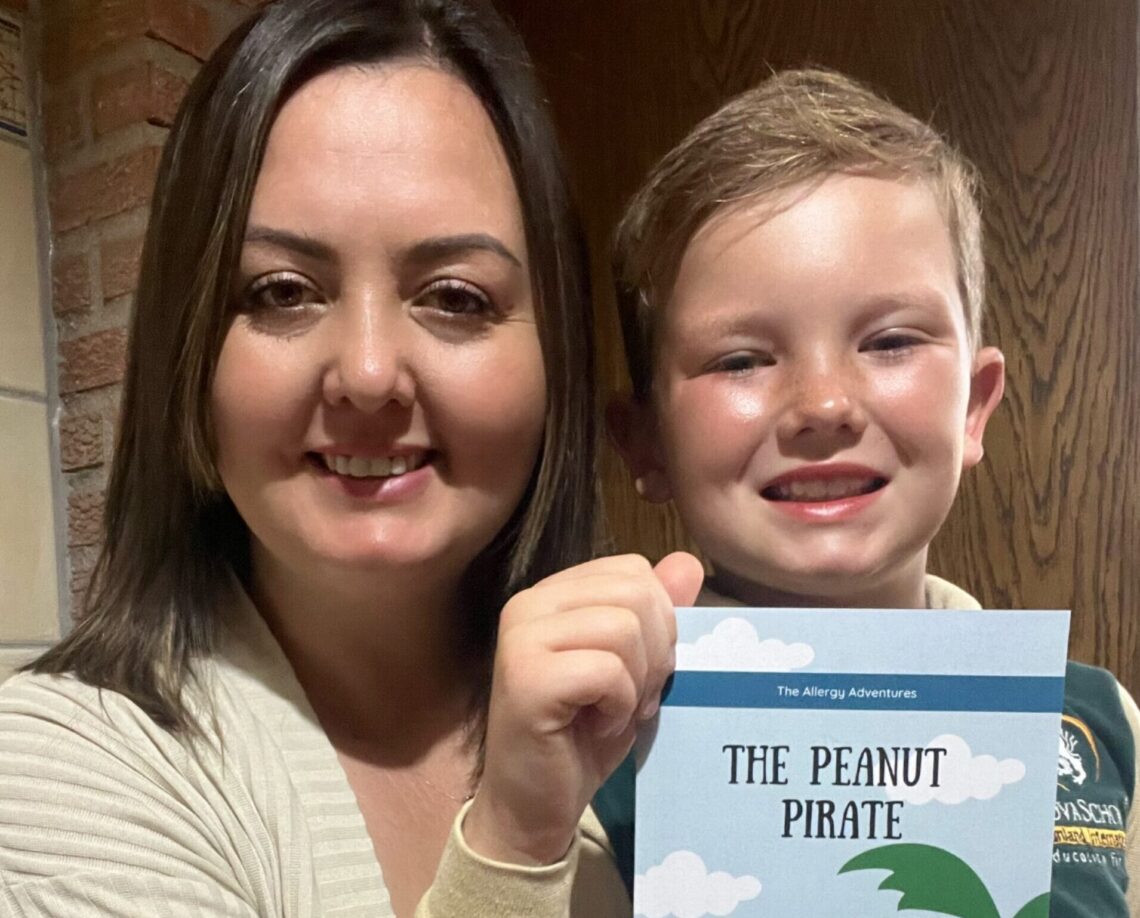
Join her by following @the_allergy_adventures on Instagram and Facebook for practical tips, insights and updates on new projects. And don’t miss her much loved children’s book, ‘The Peanut Pirate’ available on Amazon — a must-read for everyone!